
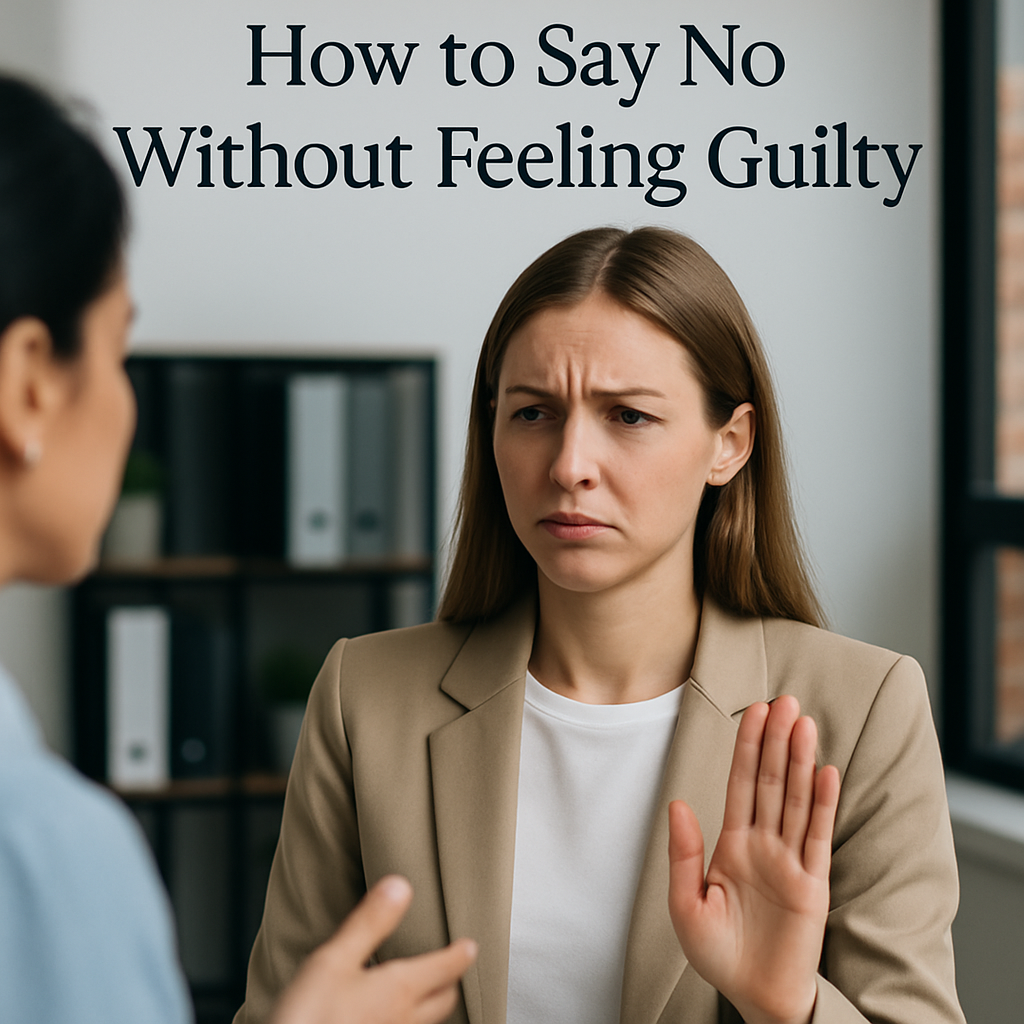
If you often say “yes” to things you don’t really want to do — whether out of obligation, fear, or habit — you’re not alone. Many people struggle to say “no” because they don’t want to disappoint others, seem selfish, or create conflict.
But here’s the truth: saying no is a form of self-care and self-respect. Learning to say no confidently and kindly is essential for protecting your time, energy, and mental health.
In this article, you’ll learn why it’s hard to say no, how to set boundaries without guilt, and phrases you can use to say no with clarity and kindness.
Why Saying No Feels So Hard
Here are a few common reasons people struggle with it:
- Fear of disappointing others
- Fear of conflict or rejection
- Guilt over putting yourself first
- Wanting to be seen as “nice” or helpful
- Not being clear on your own priorities
But constantly saying yes to others often means saying no to yourself.
The Cost of Always Saying Yes
- Burnout and exhaustion
- Overcommitment and poor time management
- Resentment toward others
- Reduced productivity on what matters most
- Loss of personal boundaries and identity
Learning to say no helps you protect your peace and your priorities.
Step-by-Step Guide to Saying No Without Guilt
1. Get Clear on Your Priorities
Before you can say no to others, you need to say yes to your own life.
Ask yourself:
- What are my top priorities right now?
- How do I want to spend my time and energy?
- What types of requests are aligned — and what aren’t?
Clarity makes “no” feel justified, not selfish.
2. Pause Before You Answer
If someone asks you for something, you don’t need to answer immediately.
Try saying:
- “Let me check my schedule and get back to you.”
- “Can I think about it and let you know?”
- “I need a moment to see if that fits with my priorities.”
This gives you space to respond intentionally instead of automatically.
3. Use Simple, Direct Language
You don’t need to over-explain, justify, or apologize excessively.
Keep it short and respectful:
- “Thanks for thinking of me, but I’m going to pass.”
- “That’s not something I can take on right now.”
- “I appreciate the offer, but I have to say no.”
- “I’m focusing on other commitments at the moment.”
Saying no doesn’t make you rude. Over-explaining often invites negotiation.
4. Practice Kindness Without Guilt
You can be kind and firm. Kindness means:
- Thanking them for asking
- Acknowledging their needs
- Being honest about your limits
Kindness doesn’t mean sacrificing yourself.
5. Offer an Alternative (If Appropriate)
If you genuinely want to help but can’t commit, offer a suggestion:
- “I can’t make it, but I’d love to catch up another time.”
- “I’m not the right person for this, but have you tried asking [name]?”
- “I don’t have time to take this on, but I can share a few resources.”
Alternatives show you care — without taking on too much.
6. Prepare for Discomfort (And Don’t Let It Stop You)
It’s okay to feel awkward or nervous at first. That’s normal.
What matters is honoring your needs despite the discomfort.
Remember:
- You’re not responsible for other people’s feelings
- Saying no is not selfish — it’s healthy
- Every time you say no to the wrong thing, you make space for the right thing
Discomfort fades. Regret doesn’t.
7. Practice Regularly (Start Small)
Like any skill, saying no gets easier with repetition.
Start by saying no to:
- Extra tasks that don’t align with your role
- Social invitations that drain you
- Favors you don’t have time or energy for
You don’t have to start with the hardest “no” — just start somewhere.
What to Say Instead of Just “No”
Here are a few respectful phrases you can use:
- “I’m honored you thought of me, but I can’t commit right now.”
- “I’m not available for that, but thank you for asking.”
- “That doesn’t align with my schedule/goals at the moment.”
- “I’d rather not — but I hope it goes well!”
- “This season is really full, so I’m keeping my focus tight.”
Choose the tone that fits your personality — professional, warm, or casual.
Final Thought: Saying No Is Saying Yes to What Matters
You don’t need to be everything to everyone.
You don’t need to please others at the expense of yourself.
You don’t need to feel guilty for honoring your limits.
When you learn to say “no” clearly and confidently, you gain:
- More time
- More peace
- More alignment with what truly matters to you
So the next time you feel pressure to say yes, pause and ask:
“Is this a full-body yes — or a people-pleasing one?”
Choose wisely. Your energy is a resource worth protecting.
Deixe um comentário