
Gratitude is more than saying “thank you.” It’s a mindset — a way of seeing life that shifts your focus from what’s missing to what’s already good. When practiced consistently, gratitude can improve your mental health, relationships, self-esteem, and even your physical well-being.
In this article, you’ll learn simple ways to practice gratitude every day, why it works, and how it can transform your personal life from the inside out.
What Is Gratitude, Really?
Gratitude is the intentional recognition of goodness in your life — whether it’s people, experiences, or even lessons from tough moments.
It’s not about ignoring problems or pretending everything is perfect. It’s about training your brain to notice what’s right, even when things aren’t easy.
Gratitude says:
- “This isn’t perfect, but I’m thankful for the small good in it.”
- “There’s beauty here, even in the chaos.”
- “I choose to notice what uplifts me, not just what stresses me.”
Why Gratitude Works: The Science Behind It
Practicing gratitude regularly has been linked to:
- Lower levels of anxiety and depression
- Better sleep quality
- Improved relationships and empathy
- Increased happiness and life satisfaction
- Reduced stress and inflammation in the body
This is because gratitude:
- Activates the brain’s reward system
- Reduces cortisol (stress hormone)
- Increases serotonin and dopamine (feel-good chemicals)
In short, gratitude literally rewires your brain for joy.
Common Misconceptions About Gratitude
Let’s clear up a few myths:
- “I need to feel grateful to practice it.”
No — practice creates the feeling over time. - “Gratitude means ignoring hard things.”
Not at all. Gratitude can exist alongside pain and struggle. - “I don’t have time to add another habit.”
Gratitude takes just a few minutes and can be added to things you already do.
10 Simple Ways to Practice Gratitude Daily
Here are practical, low-effort techniques you can try starting today:
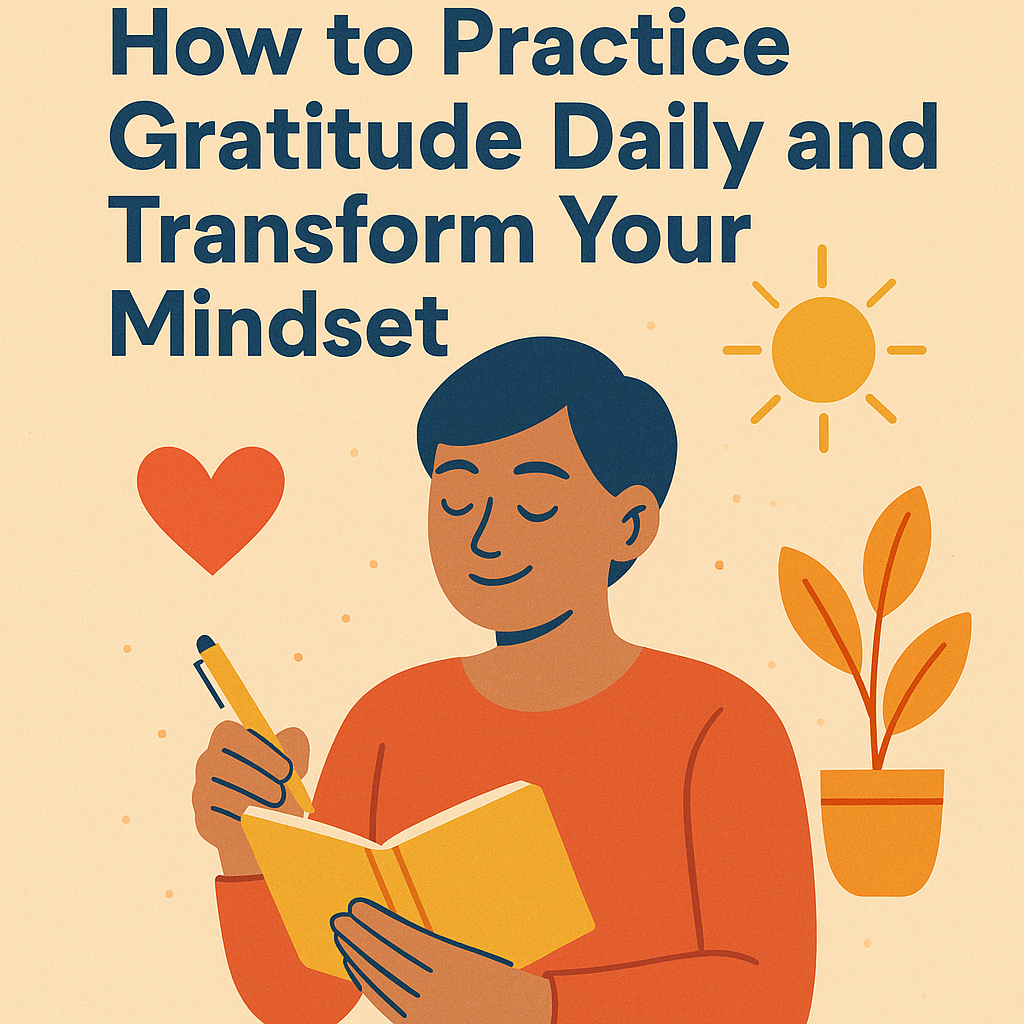
1. Start a Gratitude Journal
Write down 3 things you’re grateful for every morning or night.
They don’t have to be big — even noticing your warm coffee or a kind text counts.
This practice builds awareness and lifts your mood over time.
2. Say “Thank You” With Intention
Make your “thank you” meaningful. Look the person in the eye.
Use their name. Add a sentence about what they did and how it helped you.
It strengthens relationships and reminds you of the good around you.
3. Use a Gratitude Jar
Each day, write something you’re grateful for on a small piece of paper and drop it in a jar.
Revisit the notes at the end of the week or month — it’s a powerful reminder of your progress and blessings.
4. Practice Mental Gratitude on the Go
While commuting, walking, or cleaning, think of:
- 3 people who support you
- 3 moments that made you smile this week
- 3 things you often take for granted
This turns downtime into powerful mindset training.
5. Create a Gratitude Alarm
Set a daily reminder on your phone that simply says:
“What are you grateful for right now?”
Pause for 30 seconds to answer mentally or out loud. It instantly resets your mindset.
6. Thank Yourself
Self-gratitude matters too. Every evening, say:
- “Thank you, self, for showing up today.”
- “Thank you for trying, even when it was hard.”
- “I appreciate my own growth.”
It builds self-respect and self-love.
7. Share Gratitude With Others
Text a friend or family member something you appreciate about them.
Example:
“Hey, I’ve been thinking about how much I value your support lately. Just wanted to say thank you.”
This boosts your mood — and theirs.
8. Turn Frustration Into Appreciation
Stuck in traffic? At the dentist? Feeling stressed?
Pause and ask:
“What can I appreciate right now, even in this?”
This reprograms your mind to look for silver linings in real-time.
9. Make Gratitude Part of Your Routine
Link gratitude to daily tasks:
- While brushing your teeth, think of one thing you’re grateful for
- Before meals, mentally thank the hands that grew and prepared your food
- Before bed, review one good moment from your day
These micro-moments add up.
10. Use Visual Cues
Place sticky notes or wallpapers around your home that say:
- “What’s one thing you’re thankful for today?”
- “Gratitude is a choice.”
- “Even now, there is something good.”
They prompt you to pause and reflect — effortlessly.
When Gratitude Feels Hard
It’s normal to have days when gratitude feels impossible. On those days, try:
- Being grateful for what you’re learning, not what you have
- Saying, “Today is hard, but I’m grateful to still be here.”
- Focusing on neutral gratitude (like clean water, electricity, or shelter)
You don’t need to feel inspired — you just need to notice one good thing.
Final Thought: Gratitude Isn’t Just a Feeling — It’s a Practice
Gratitude won’t fix everything. But it will change how you experience everything.
It turns chaos into clarity. Pressure into perspective. Ordinary moments into gold.
Start small. Be consistent. And watch as your entire mindset — and life — begins to shift.
Even now, something good is unfolding. Can you see it?
Deixe um comentário