
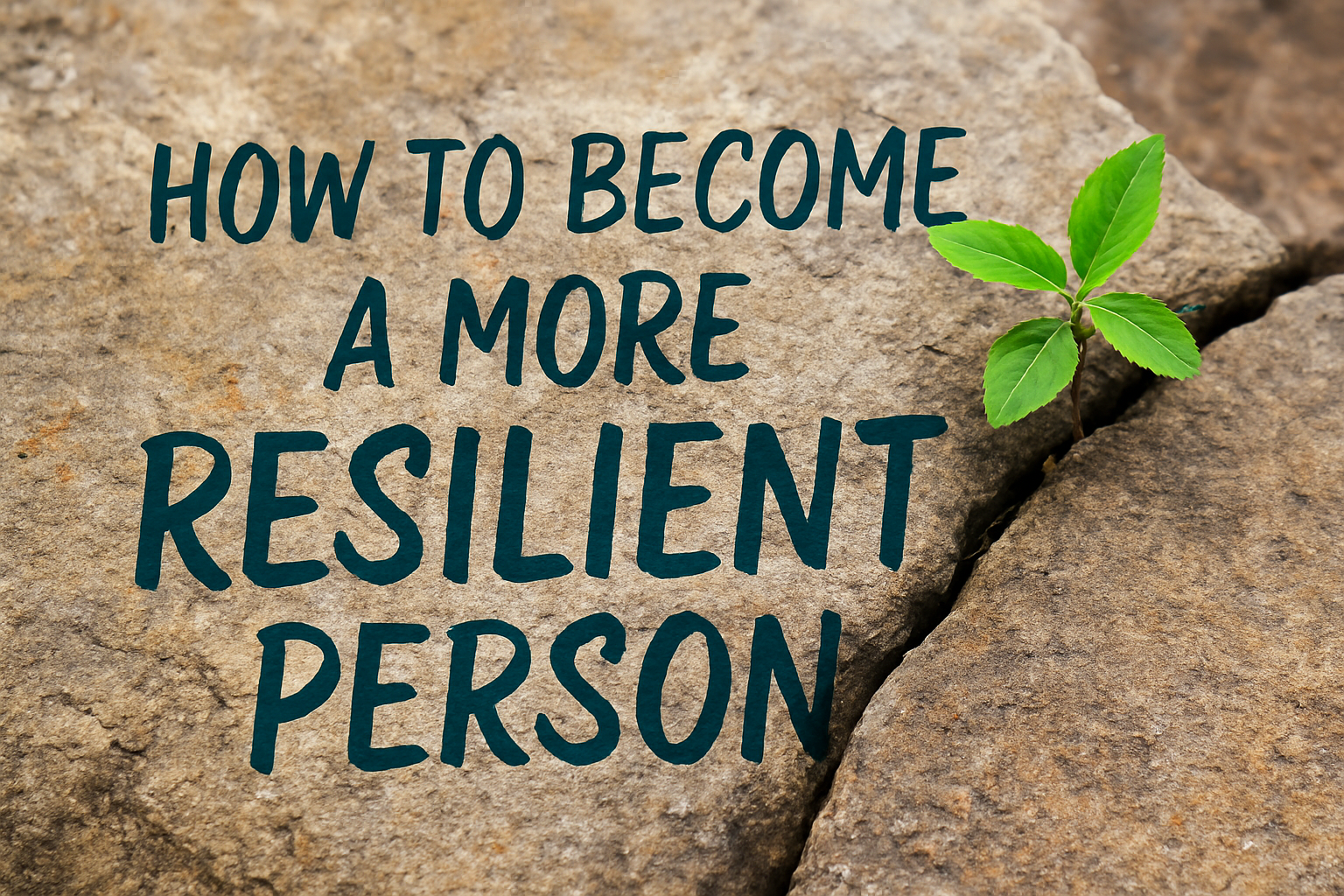
Life isn’t always smooth. Challenges, disappointments, and unexpected changes are inevitable. But your ability to bounce back — your resilience — can make all the difference. Resilient people don’t avoid pain or failure; they grow through it.
In this article, you’ll learn what resilience really is, why it matters in your personal life, and practical steps you can take to become emotionally stronger and more adaptable every day.
What Is Resilience?
Resilience is the ability to recover from difficulties, adapt to change, and keep going when things get tough. It’s not about being unaffected by hardship — it’s about developing the inner strength to overcome adversity and keep moving forward.
Resilient people:
- Face challenges without giving up
- Learn and grow from setbacks
- Stay calm and grounded during stress
- Maintain a sense of hope and direction
And the best part? Resilience is a skill — not a fixed trait.
Why Resilience Matters in Personal Growth
Building resilience empowers you to:
- Navigate uncertainty with less fear
- Cope better with stress and anxiety
- Reframe failures as lessons
- Strengthen your emotional intelligence
- Live with more confidence and self-trust
Without resilience, even small obstacles can feel overwhelming. With it, you feel capable of handling whatever comes your way.
Common Misconceptions About Resilience
Let’s clear up a few myths:
- Myth: Resilient people don’t feel emotions.
Truth: They feel everything — they just process emotions constructively. - Myth: You’re either born resilient or not.
Truth: Resilience can be learned and practiced at any age. - Myth: Being resilient means going it alone.
Truth: Strong support systems often help build resilience.
10 Practical Ways to Build Resilience
Here are realistic, research-backed ways to strengthen your resilience:
1. Build a Daily Mindfulness Practice
Mindfulness helps you observe emotions without reacting impulsively.
Even 5–10 minutes a day can build your mental and emotional flexibility.
Start with:
- Deep breathing
- Body scans
- Guided meditation apps
2. Develop Emotional Awareness
Resilient people recognize their feelings instead of suppressing them.
Keep a journal and label emotions daily: “Today, I felt anxious when…”
Awareness is the first step toward emotional regulation.
3. Strengthen Your Support Network
You don’t need to handle everything alone.
Surround yourself with people who:
- Listen without judgment
- Encourage your growth
- Help you gain perspective
Ask for help — that’s strength, not weakness.
4. Reframe Negative Thoughts
When adversity strikes, how you think about it matters more than what happened.
Practice reframing:
- Instead of “I failed,” say “I learned.”
- Instead of “This is too hard,” say “I’ll take it one step at a time.”
You can’t always control what happens, but you can control the story you tell yourself.
5. Set Meaningful Goals
Goals give you purpose, and purpose strengthens resilience.
Even during tough times, having something to strive toward can help you feel grounded and motivated.
Break big goals into smaller steps so you keep moving forward, even when progress is slow.
6. Practice Self-Compassion
Talk to yourself like you would to a good friend.
Instead of harsh self-criticism, try:
- “I’m doing the best I can.”
- “It’s okay to not be okay today.”
- “This doesn’t define me.”
Self-compassion is fuel for recovery.
7. Take Care of Your Body
Physical health impacts mental strength.
Support your resilience by:
- Sleeping 7–9 hours
- Moving your body daily
- Eating whole, energizing foods
- Avoiding excess caffeine or alcohol during stress
Your body is your foundation — protect it.
8. Learn From Challenges
Every setback is a chance to grow. Ask:
- “What did I learn?”
- “How did I handle it well?”
- “What will I do differently next time?”
Reflecting turns pain into wisdom.
9. Focus on What You Can Control
Resilient people focus their energy on what they can influence — not what they can’t.
Use the “circle of control” mindset:
- Inside: your effort, mindset, routines
- Outside: other people, traffic, global events
Let go of the rest.
10. Stay Hopeful — Even in Uncertainty
Hope is not denial — it’s a belief that things can improve.
Cultivate hope by:
- Celebrating progress (not just results)
- Visualizing a positive future
- Reminding yourself of past wins
Hope helps you keep showing up.
Real-Life Signs You’re Becoming More Resilient
You might notice:
- You recover faster from disappointment
- You feel emotions but don’t let them rule you
- You respond to stress more calmly
- You’re more accepting of imperfection
- You keep going even when motivation fades
These are signs your resilience is growing — one step at a time.
Final Word: Strength Comes From Struggle
Resilience isn’t about being unaffected by life — it’s about letting challenges shape you, not shatter you.
It’s waking up after failure and choosing to try again. It’s crying when needed, then standing taller the next day.
Every time you get back up, you become a stronger, more grounded version of yourself.
You don’t have to be fearless to be resilient.
You just have to keep going — even when it’s hard.
Deixe um comentário