
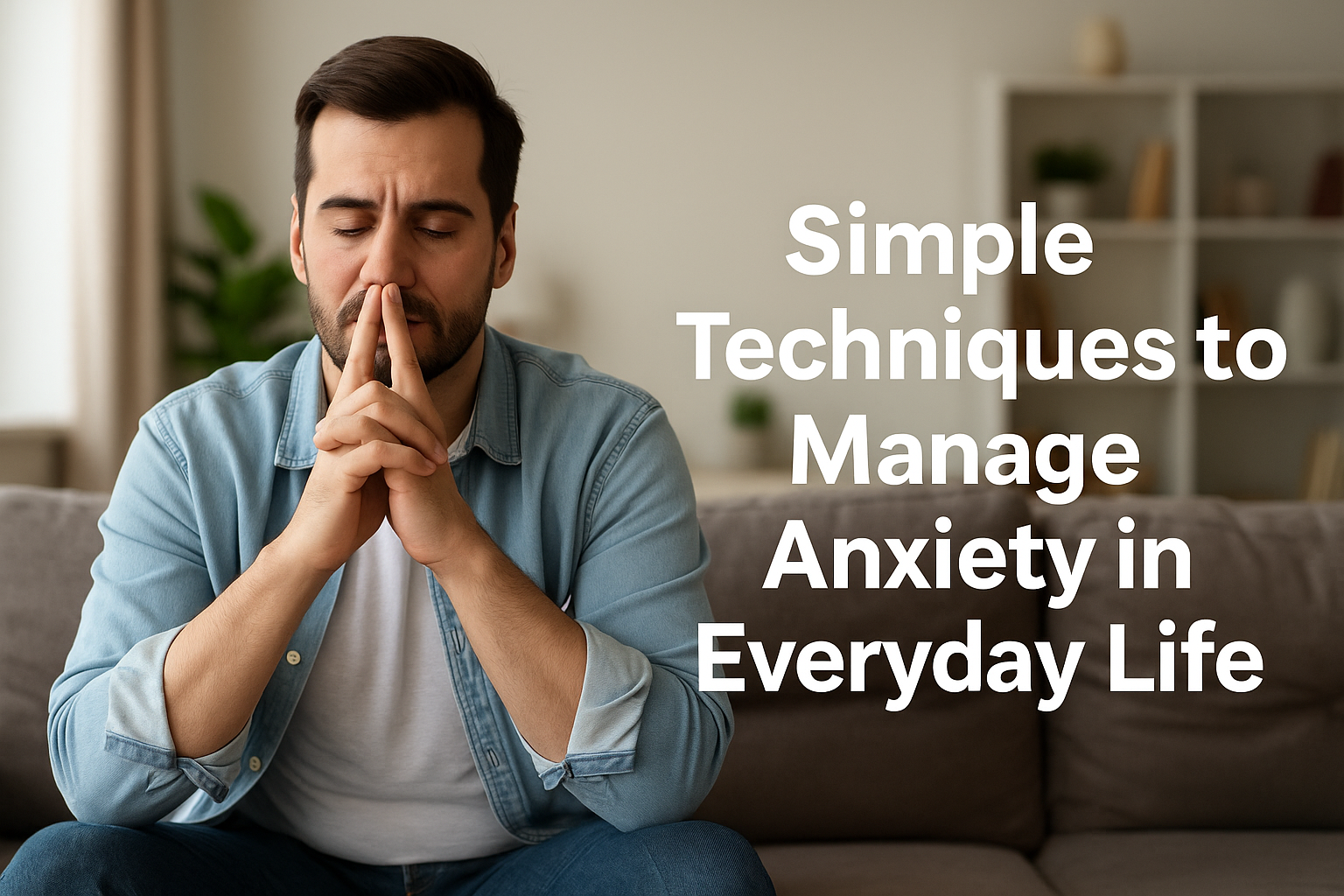
Anxiety is a natural part of being human — it’s how our bodies respond to stress, uncertainty, or perceived danger. But when anxiety becomes a daily struggle, it can affect your health, productivity, and personal growth. The good news is that you don’t have to live under its weight.
This article shares simple, effective techniques you can use daily to manage anxiety, feel calmer, and take back control of your mind and emotions.
Understanding Anxiety
Anxiety is more than just worry. It can show up as:
- Racing thoughts
- Tightness in the chest
- Restlessness or fatigue
- Trouble focusing
- Difficulty sleeping
While some anxiety is normal, especially during stressful situations, it becomes a problem when it’s constant or overwhelming — especially when it interferes with your ability to function or enjoy life.
You’re Not Alone
Over 280 million people worldwide live with anxiety disorders. But many more experience daily anxiety symptoms without formal diagnoses. You’re not broken — you’re human.
Let’s look at powerful, science-backed tools you can start using today.
1. Try the 4-7-8 Breathing Technique
This simple breathing method is used by therapists and meditation experts to quickly calm the nervous system.
How it works:
- Inhale for 4 seconds
- Hold the breath for 7 seconds
- Exhale slowly for 8 seconds
Repeat this for 4–5 rounds. You can do it anywhere — during a meeting, before sleep, or while waiting in line.
Why it works: It activates the parasympathetic nervous system, which is responsible for relaxation.
2. Ground Yourself With the 5-4-3-2-1 Method
When anxiety makes your mind race, grounding techniques bring your focus back to the present.
Try this:
- 5 things you can see
- 4 things you can touch
- 3 things you can hear
- 2 things you can smell
- 1 thing you can taste
This technique pulls your brain out of “what if” thinking and into “what is.”
3. Move Your Body — Even for 10 Minutes
Physical movement is a proven anxiety reliever. You don’t need a gym or long workouts — just get your blood flowing.
Ideas:
- Stretch for 5–10 minutes
- Walk around the block
- Dance to your favorite song
- Do some squats or jumping jacks
Exercise releases endorphins and reduces the levels of stress hormones like cortisol.
4. Challenge Negative Thoughts
Anxiety loves to exaggerate. Learn to talk back to those anxious thoughts.
Examples:
- Thought: “I’ll mess this up.”
- Challenge: “I’ve handled things like this before.”
- Thought: “Everyone will judge me.”
- Challenge: “Most people are too focused on themselves to notice.”
Don’t accept every thought as truth. Learn to question and reframe them.
5. Reduce Your Stimulant Intake
Caffeine, sugar, and energy drinks can spike anxiety symptoms. Try replacing them with:
- Herbal teas (like chamomile or peppermint)
- Water with lemon or cucumber
- Decaf coffee or matcha
If you notice more jitters, irritability, or restlessness after certain drinks or snacks, consider adjusting your intake.
6. Create a “Worry Time” Window
Instead of trying to stop worrying altogether, give your brain permission to worry at a specific time.
How to do it:
- Set a timer for 10–15 minutes a day
- Write all your worries in a journal
- When the timer ends, stop
This reduces all-day anxiety and teaches your mind that not every worry needs attention right now.
7. Limit Anxiety Triggers (Especially Digital)
Constant news updates, social media, and toxic content can trigger anxiety without us realizing it.
Strategies:
- Turn off non-essential notifications
- Unfollow accounts that create stress or comparison
- Set app time limits
- Avoid reading the news first thing in the morning or before bed
Protect your mental space like it’s sacred — because it is.
8. Build a Calm Evening Routine
Anxiety often spikes at night. A peaceful evening routine helps your mind wind down.
Ideas to include:
- Journaling or brain dumping
- Reading fiction instead of scrolling
- Lighting a candle or using essential oils
- Going screen-free 30 minutes before sleep
Your brain needs a clear signal that it’s time to rest — not to overthink.
9. Practice “Name It to Tame It”
When you feel anxious, label the emotion:
- “I’m feeling worried.”
- “This is fear.”
- “I’m overwhelmed right now.”
Naming an emotion activates the prefrontal cortex — the rational part of your brain — and helps calm the emotional storm.
10. Talk to Someone
Sometimes, the best anxiety relief is connection.
Call a friend. Message a loved one. Talk to a therapist or coach. Say out loud what’s been building up inside you.
You don’t need to carry everything alone.
Extra Tips for Managing Anxiety Long-Term
- Keep a journal: Track triggers and patterns
- Limit multitasking: Focus on one thing at a time
- Spend time in nature: Even 10 minutes a day can help
- Practice self-compassion: It’s okay to struggle
Final Thought: You’re Stronger Than Anxiety
Anxiety doesn’t define you. It’s not a flaw. It’s not a failure.
It’s your brain trying to protect you — just a little too hard.
By using these tools consistently, you teach your mind a new way to respond. A calmer way. A clearer way.
You don’t have to silence every anxious thought to feel peace.
You just need to respond differently — one moment at a time.
Deixe um comentário